Sani Abacha’s Government: State Creation, Public Programmes and a Contested Record
Nigeria’s Leaders Series | Head of State, 1993–1998
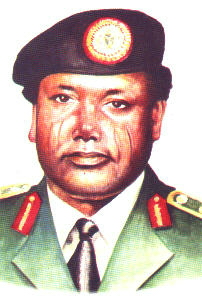
Sani Abacha ruled Nigeria from November 1993 until his death in June 1998. Several institutions and administrative changes date from his government, but they must be assessed alongside its severe repression.
Institutional and administrative changes
- Six additional states: The creation of Bayelsa, Ebonyi, Ekiti, Gombe, Nasarawa and Zamfara in 1996 brought Nigeria to its present 36-state structure.
- Petroleum Trust Fund: The PTF was established to channel designated petroleum-related revenue into public programmes, including infrastructure and services. Its existence and spending are distinct from the question of how effectively each project served the public.
- National Human Rights Commission: The commission was legally established in 1995. Its creation did not mean the government respected human rights or that the institution was free from constraints.
Essential context
Detention of opponents, restrictions on civic freedoms and the execution of Ken Saro-Wiwa and eight other Ogoni activists in 1995 are central to the historical assessment. Administrative achievements cannot erase these abuses. Claims of extraordinary economic success also require careful scrutiny rather than repetition of unsourced statistics.
Sources and further reading
- Human Rights Watch: Nigeria background and institutions
- Human Rights Watch: contemporary reporting
- Abacha biography and references
Bagale Pulse historical series. Reviewed 4 October 2026. Government achievements reflect the work of institutions and citizens as well as national leaders.